GEOTECHNICAL ENGINEERING1
BRIGHTON

Geotechnical Engineering in Brighton

Practical geotechnics, field-tested.

LEARN MORE

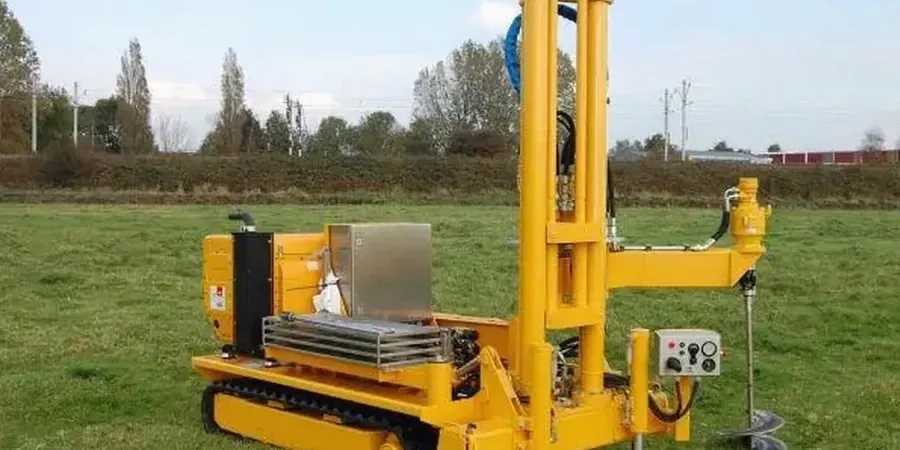
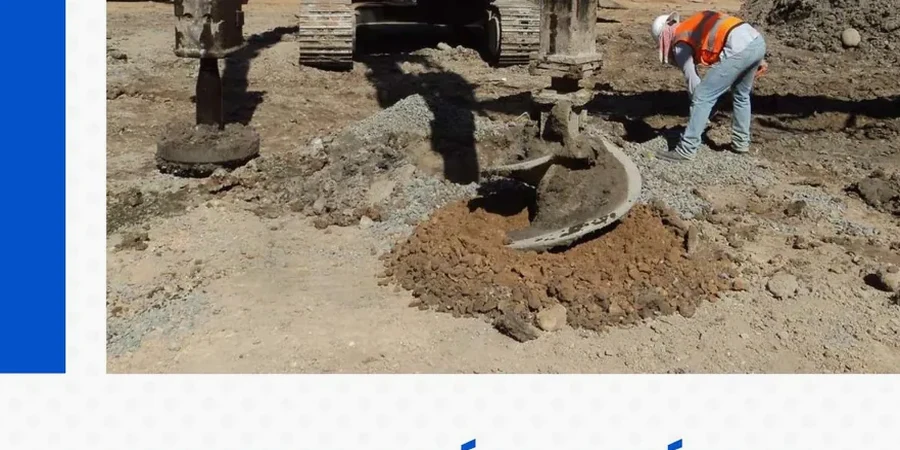
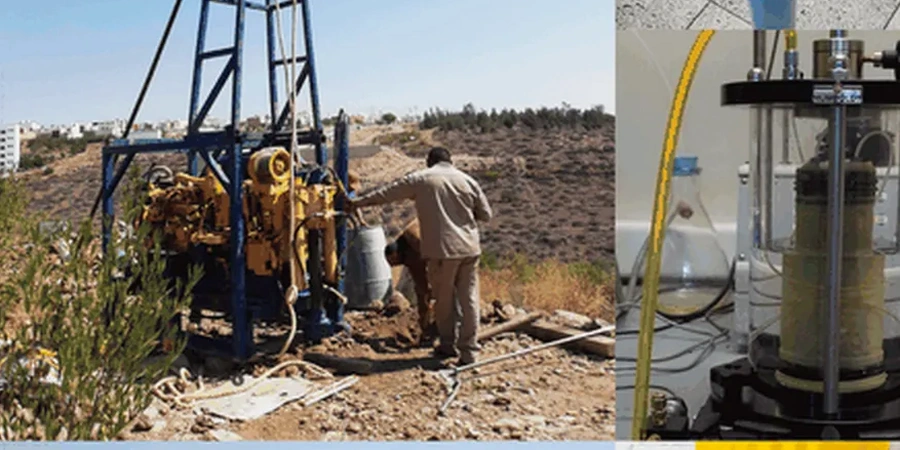
Brighton’s geology is dominated by the Upper Cretaceous White Chalk Subgroup, a formation that dictates almost every foundation decision between the seafront and the South Downs. In our experience, the chalk here is rarely uniform; the upper 3 to 5 metres often consist of structureless Grade IV-V putty chalk with solution features and clay-infilled pipes that can punch straight through to more competent Grade II rock. A generic desk study misses these local details. That is precisely why a thorough soil mechanics study must integrate rotary coring with standard penetration tests to map the transition from weathered mantle to intact chalk. Along the coastal strip from Kemptown to Hove, we also encounter raised beach deposits and Coombe Head gravels overlying the chalk, creating a perched water table scenario that complicates shallow foundation design. The combination of marine erosion, former valley infills like the Wellesbourne, and a fluctuating groundwater regime tied to tidal influences means laboratory classification alone is not enough; the mechanical behaviour of each horizon needs to be measured under the specific moisture and density conditions found on site.

The chalk beneath Brighton is not a single material: from putty to intact rock, the strength can vary by a factor of twenty within the first six metres.
Geotechnical Engineering in Brighton
Technical reference — Brighton

Our service areas

Local geology

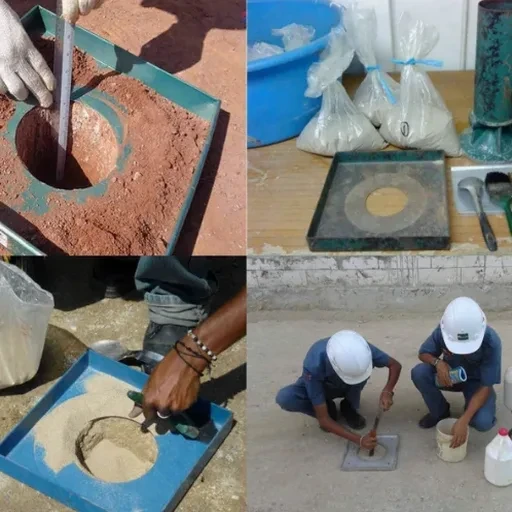
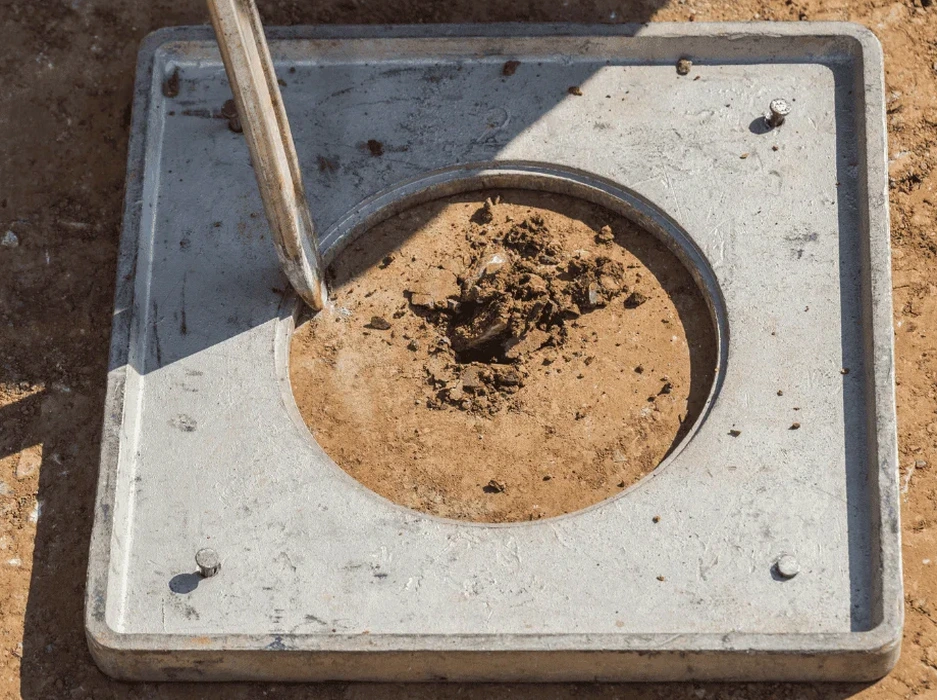
Brighton’s maritime climate introduces a mechanical weathering cycle that inland sites never experience. The constant wetting and drying of the chalk face, combined with salt spray along the Madeira Drive and Marina areas, accelerates the breakdown of intact fabric into a soft, compressible matrix. Our laboratory programme for a soil mechanics study in this environment goes beyond basic classification: we run consolidated-undrained triaxial tests on chalk specimens to capture the brittle-to-ductile transition that occurs as confining pressure increases, and we pair these with oedometer tests to quantify the collapse potential of the upper weathered crust. In the city centre, where Victorian sewers and Regency-era basements have locally disturbed the ground, we frequently combine the soil mechanics investigation with test pits to visually log the backfill profile and with CPT testing to obtain a continuous sleeve friction and pore pressure record through the variable drift deposits. The data feeds directly into a geotechnical model that distinguishes between the in-situ chalk mass, the disturbed chalk, and the anthropogenic fill, each with its own strength and stiffness parameters for the Eurocode 7 design case.

Reference standards

BS 5930:2015+A1:2020 – Code of practice for ground investigations, BS EN 1997-1:2004 – Eurocode 7: Geotechnical design – General rules, BS EN 1997-2:2007 – Eurocode 7: Ground investigation and testing, BS 1377 – Methods of test for soils for civil engineering purposes, CIRIA C574 – Engineering in chalk

Need a geotechnical assessment?

Reply within 24h.

Email: contact@geotechnical-engineering1.com

Why choose us

BS EN 1997-1:2004 requires that the ground model accounts for features that could cause the ultimate limit state to be reached in a brittle manner, and in Brighton this means the solution pipes and dissolution cavities within the chalk. These vertical voids, often filled with soft clay or sand, can remain undetected by a widely spaced borehole grid yet be large enough to trigger a sudden loss of bearing capacity under a pad footing. Equally dangerous is the presence of metastable Coombe deposits on sloping ground above the chalk interface; a rise in pore pressure after heavy winter rainfall can reduce the effective stress to the point where a shallow landslide initiates. Our risk assessment for each soil mechanics study quantifies the probability of encountering a dissolution feature larger than 0.5 m in diameter, using the density of recorded pipes in the British Geological Survey archives for the Brighton and Hove area, and then proposes a verification strategy, typically a tighter grid of dynamic probes or a geophysical survey, to reduce the residual risk to an acceptable level before construction begins.

Technical parameters

ParameterTypical value
Undrained shear strength (cu) – intact Grade I/II chalk600 to >1500 kPa
Undrained shear strength (cu) – Grade IV/V putty chalk40 to 80 kPa
Effective friction angle (φ') – intact chalk32° to 38°
Young's modulus (E) – Grade III chalk200 to 600 MPa
Saturation moisture content – weathered chalk25% to 35%
Soluble sulfate content (groundwater)Class DS-1 to DS-3 per BRE SD1
Typical SPT N-value – Coombe deposits8 to 25 blows/300 mm

Quick answers

How much does a soil mechanics study cost for a typical Brighton residential extension?

For a single-storey rear extension on the chalk, a soil mechanics study including a window sampler borehole, laboratory classification, and a factual report usually falls between £2,520 and £4,340. The final cost depends on the depth to competent chalk, the number of samples recovered, and whether sulfate and pH testing is required for concrete class selection.

What is the biggest geotechnical mistake you see on Brighton sites?

The most common error is treating the chalk as a uniform rock and assuming a high bearing capacity without verifying the grade. We have seen projects where a pad foundation was designed for 300 kPa on what turned out to be Grade V structureless chalk, leading to excessive settlement. A hand vane test or a simple SPT in the trial pit is enough to distinguish between the grades and avoid this.

Do I need to worry about dissolution features if my borehole didn't find any?

A single borehole has a very small footprint and cannot rule out solution pipes. In Brighton, the BGS records show a non-negligible density of these features in the White Chalk. We typically recommend a microgravity survey or a close-spaced dynamic probe grid as a second-stage investigation if the structure is settlement-sensitive or if the borehole log shows clay-infilled fissures, which are often associated with nearby pipes.

How does the tidal groundwater affect the soil mechanics parameters?

The chalk aquifer beneath Brighton is in hydraulic continuity with the sea, so the groundwater level fluctuates with the tide, dampened with distance inland. When we run effective-stress triaxial tests, we saturate the specimens at a back pressure that reflects the mean groundwater level measured over a full tidal cycle. This ensures the drained strength parameters are not overestimated due to partial saturation, which is a real risk if the samples are tested at their as-received moisture content.

Location and service area

We serve projects across Brighton and surrounding areas.

View larger map