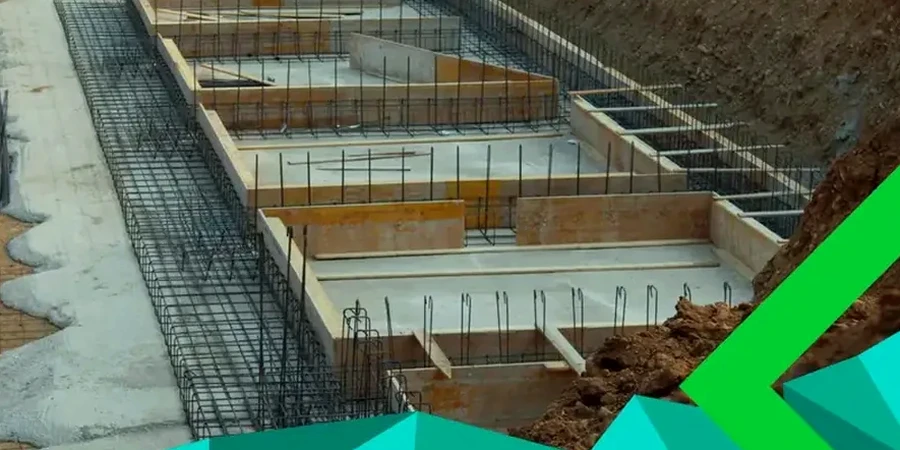
In Brighton, foundation design must account for the variable coastal geology, ranging from chalk bedrock to compressible alluvium and made ground. Our category covers the geotechnical assessment and structural solutions required to comply with UK standards, including Eurocode 7 and the NHBC guidelines prevalent in local residential developments. A deep understanding of the chalk’s dissolution features is critical, often making a standard spread footing unsuitable and leading to the need for a robust pile foundation design to transfer loads to competent strata.
This expertise is essential for everything from seafront regeneration projects and Victorian terrace underpinning to new builds on the South Downs’ slopes. For sites with aggressive ground conditions or high water tables, we integrate detailed material specification and durability assessments directly into the foundation solution. This ensures long-term stability and mitigates risks associated with Brighton's unique hydrogeological setting, delivering safe, enduring structures.
BS 8081:2015 – Code of practice for grouted anchors, BS EN 1997-1:2004 – Eurocode 7: Geotechnical design, BS EN ISO 22477-5:2018 – Testing of geotechnical structures: Anchor testing, CIRIA C574 – Engineering in chalk, BRE Special Digest 1 – Concrete in aggressive ground
An active anchor is tensioned immediately after installation using a hydraulic jack, locking in a design load that pre-compresses the structure against the ground. This prevents movement before it starts. A passive anchor is not tensioned; it only develops resisting force once the ground begins to displace. In Brighton, active anchors are typically specified for retaining walls adjacent to existing buildings where even 5 mm of movement could cause damage, while passive anchors or soil nails are more common for slope stabilisation where some deformation is acceptable.
Anchor design fees in Brighton typically fall between £880 and £3,420, depending on the number of anchors, the complexity of the ground profile, and whether the project requires temporary or permanent works design. A small retaining wall with four active anchors will sit at the lower end, while a multi-level anchored excavation with corrosion protection and long-term monitoring requirements will be at the upper end. All designs include the testing specification and construction-phase support.
Chalk is generally a good anchoring medium, but Brighton's chalk presents specific challenges. The presence of flint bands can deflect drilling equipment and create irregular borehole profiles. Solution features (dissolution cavities) can cause sudden grout loss during installation. Weathering grades vary sharply with depth and location, which affects the ultimate bond stress. Our designs address these factors by requiring thorough site investigation and by specifying drilling and grouting methods appropriate to the chalk grade encountered.
For a typical Brighton project with 10 to 20 anchors, we deliver the detailed design package within 10 to 15 working days after receiving the final ground investigation report. This timeline includes the load case analysis, bond length calculations, corrosion protection specification, and the preparation of the testing schedule. More complex schemes involving numerical modelling of soil-structure interaction may require an additional week.
For permanent anchors located within 500 metres of Brighton's shoreline, BS 8081 requires double corrosion protection (DCP). This means the tendon is protected by both a corrugated plastic sheath filled with grout and an outer encapsulating sheath, with the anchor head sealed against moisture ingress. In the splash zone or where groundwater is saline, we also specify stainless steel components for the anchor head assembly and conduct chemical testing of the groundwater per BRE Special Digest 1 to confirm the aggressivity classification before finalising the protection system.
This service complements our laboratory testing work for a complete project analysis.