GEOTECHNICAL ENGINEERING1
BRIGHTON
HomeUnderground ExcavationsGeotechnical design of deep excavations

Geotechnical Design of Deep Excavations in Brighton

Practical geotechnics, field-tested.

LEARN MORE

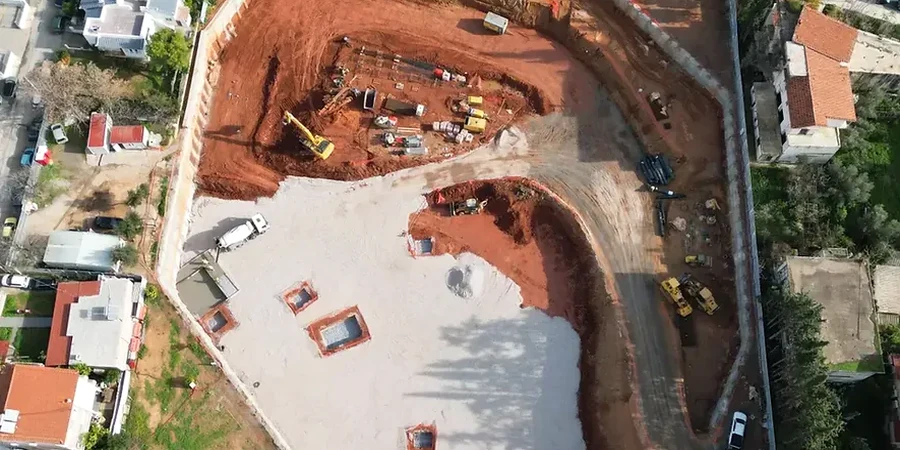
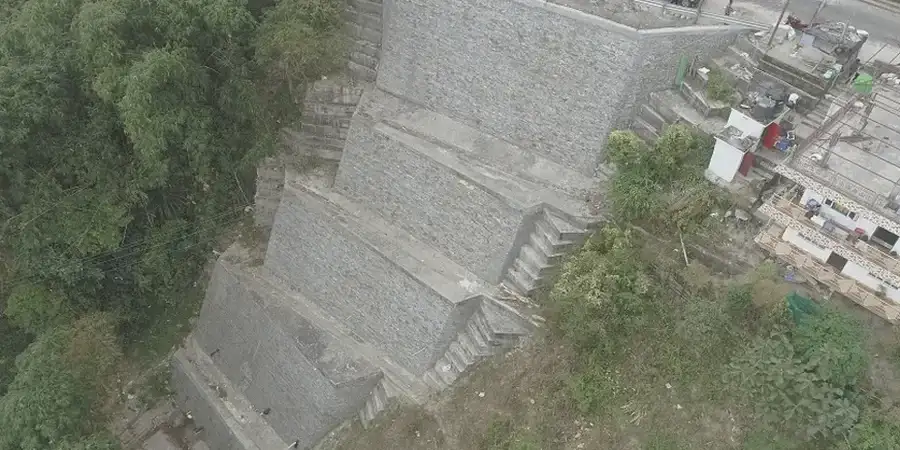
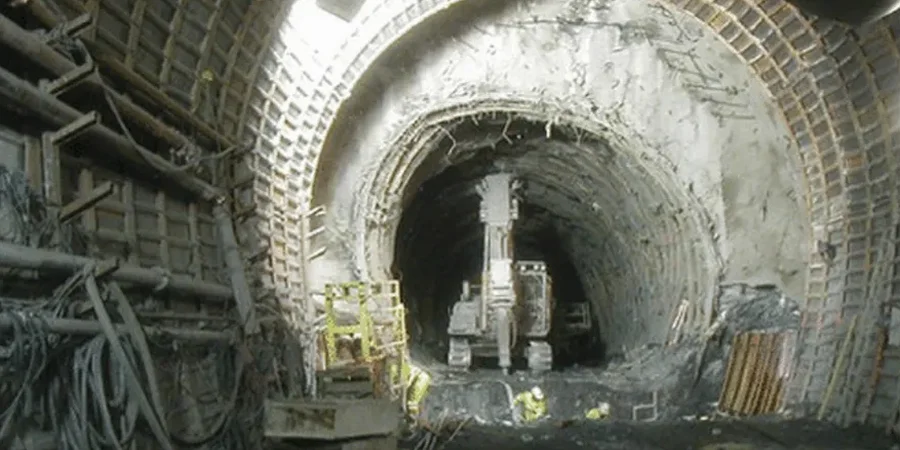
Brighton’s subsurface is a geological puzzle. The city sits on a perched aquifer within the White Chalk Subgroup, overlain by Pleistocene Coombe deposits and pockets of raised beach shingle—a legacy of the post-glacial Flandrian transgression. This isn’t London Clay. On the seafront, the chalk is heavily fractured with solution features; a few hundred metres inland, you hit dense flint bands that chew through cutter heads. Every deep excavation here, from basement car parks on North Street to storm attenuation shafts near the Marina, demands a design that accounts for steep chalk faces, variable groundwater perched on the clay-with-flints, and the risk of crown collapse in weathered zones. The team provides geotechnical design of deep excavations that starts with the British Geological Survey 1:10,000 digital map and gets refined by site-specific test pits logging and laboratory strength testing. No assumptions. Just Brighton ground truth.

Brighton's chalk isn't uniform—fracture spacing and flint band continuity dictate the excavation support design more than any textbook UCS value.
Our service areas

Our approach and scope

A recent project on Edward Street required a 9-metre cut adjacent to a Victorian terrace. The initial SI showed Grade II chalk with a UCS of 3.5 MPa—competent at first glance. But the atterberg limits on the overlying Coombe deposit told a different story: a silty clay with a plasticity index of 22, prone to softening under vibration. The design evolved into a secant piled wall with a single level of temporary props, verified by wedge analysis in the fractured chalk mass. This is typical Brighton. The solution isn’t copied from a textbook; it’s built from the ground up, matching the excavation support system to the actual stiffness of the chalk and the real groundwater profile measured in standpipes, not assumed from regional maps.
Geotechnical Design of Deep Excavations in Brighton
Technical reference — Brighton

Site-specific factors

BS EN 1997-1:2004 demands that the design of deep excavations considers all ultimate limit states, and in Brighton, that means three things: face instability in fractured chalk, base heave where the Coombe deposit pinches out, and groundwater-induced piping at the chalk-overburden interface. The raised beach shingle beneath the Old Steine is a known high-permeability layer, and a single unsealed investigation borehole can create a hydraulic short-circuit. Our approach embeds the CIRIA C760 guidance on chalk into the ground model from day one. We don’t wait until the tender stage to flag these risks. The design report quantifies them, and the construction sequence is drawn to manage them, not just to meet a programme date.

Need a geotechnical assessment?

Reply within 24h.

Email: contact@geotechnical-engineering1.com

Reference standards

BS 5930:2015+A1:2020 (Code of practice for ground investigations), Eurocode 7: BS EN 1997-1:2004 (General rules) and BS EN 1997-2:2007 (Ground investigation and testing), CIRIA C760: Guidance on embedded retaining wall design, CIRIA C574: Engineering in chalk, BS EN ISO 22475-1:2021 (Geotechnical investigation and testing)

Technical parameters

ParameterTypical value
Design standardEurocode 7 (BS EN 1997-1:2004), Design Approach 1
Chalk Grade range encounteredGrade II (medium dense) to Grade IV (structureless)
Typical retaining systemsSecant piles, CFA contiguous wall, sheet piles (Marina area)
Groundwater controlDeep well dewatering, vacuum-assisted (Coombe deposits)
Maximum design depth completed12.5 m below street level
Analysis methodsFEM (Plaxis 2D/3D), WALLAP, limit equilibrium wedge
Flint band mitigationPre-augering, reduced drilling rates, core barrel extraction
Monitoring specificationBS EN ISO 18674 series, automated total stations

Quick answers

What chalk grades are typically found in Brighton, and how do they affect excavation design?

Brighton's White Chalk Subgroup ranges from Grade II (medium dense, structured) to Grade IV (structureless, remoulded). Grade II chalk can stand near-vertical in short-term cuts; Grade IV behaves as a cohesionless silt and requires immediate support. The design must account for the transition between grades, often within a few metres vertically, and the presence of tabular flint bands that create hard drilling zones.

Do you include the effects of flint bands in the retaining wall analysis?

Yes. Flint bands in the Brighton chalk are near-continuous tabular layers that can cause refusal during piling and create stress concentrations in the wall. We model them as discrete stiff layers in the finite element analysis and specify coring or pre-augering through the band where required, based on the actual flint percentage logged in the SI boreholes.

How do you handle the Coombe deposits overlying the chalk?

The Coombe deposits in Brighton are solifluction-derived silty clays with variable gravel content. They are sensitive to moisture change and vibration. We treat them as a separate geotechnical unit with drained strength parameters from triaxial testing, and design the dewatering to avoid drawdown within this layer if it would trigger settlement of nearby masonry buildings.

What is the typical cost range for a deep excavation design package in Brighton?

A complete geotechnical design package for a deep excavation in Brighton—including ground model development, retaining wall analysis, dewatering design, and construction sequence drawings—ranges from £1.640 to £5.760 depending on the excavation depth, complexity of groundwater control, and the number of adjacent structures requiring settlement assessment.

Is the design compliant with Brighton & Hove City Council's building control requirements?

All designs are prepared to Eurocode 7 (BS EN 1997) and supported by factual and interpretative reports that align with BS 5930:2015. The documentation package is structured to satisfy the full plans application process of Brighton & Hove City Council Building Control, including the geotechnical design statement and monitoring plan required under Approved Document A.

Location and service area

We serve projects across Brighton and surrounding areas.

View larger map