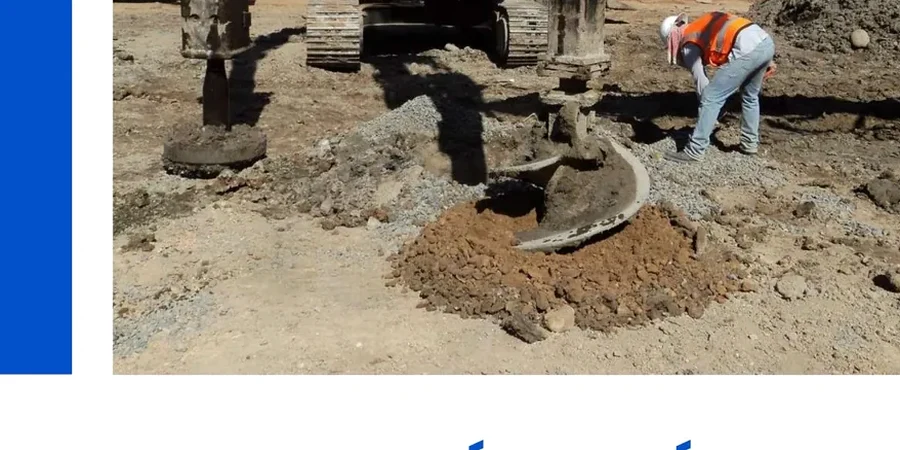
The coastal plain beneath Brighton conceals a challenging stratigraphy that demands careful ground improvement. Beneath the thin topsoil, site investigations frequently encounter the Lewes Nodular Chalk Formation with Grade II to III weathering, overlain by soft alluvial clays and silts in the river valleys leading to the English Channel. The chalk itself presents a dual problem: its high porosity creates a significant aquifer while solution features and dissolution pipes can cause sudden collapse under structural loads. In the Brighton Marina area and along the A23 corridor, we consistently record SPT N-values below 6 in the upper 4 metres, which makes natural bearing capacity inadequate for multi-storey developments. This is where stone column design becomes the most cost-effective solution, transforming compressible strata into a composite ground mass that can support strip footings or lightly reinforced rafts without deep piling. Our laboratory correlates index properties from grain-size analysis and Atterberg limits directly to the required column spacing and aggregate specification, ensuring every installation is tailored to the actual fines content encountered on site.
In Brighton's chalk terrain, stone column design must account for dissolution features and a high groundwater table: the Priebe method alone is insufficient without site-specific triaxial data on the matrix clay.