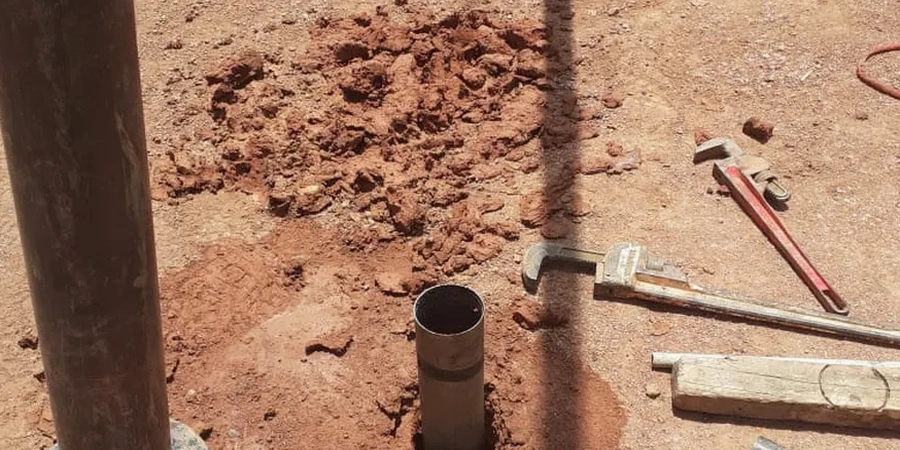
Brighton's subsurface tells two very different stories. The South Downs chalk aquifer delivers rapid groundwater flow through fracture networks, while the coastal plain's Quaternary deposits can hold water with almost negligible movement. This hydrogeological contrast within a single city boundary demands a rigorous approach to in-situ permeability measurement. Whether a project sits on the weathered chalk of Hollingbury or the brickearth and gravels near the seafront, designing dewatering systems, cut-off walls, or contamination barriers without a field-scale permeability test means operating on guesswork. The Lefranc test provides reliable point-source data in soil and weak rock, while the Lugeon test quantifies fracture flow in the chalk bedrock that defines so much of Brighton's geology. Both methods, executed under BS 5930 and Eurocode 7, transform site-specific assumptions into defensible design parameters. For projects where groundwater control is critical—deep basements in the city centre or slope drainage on the A27 corridor—combining these tests with a wider site investigation using test pits builds a complete picture of the local hydrostratigraphy before major earthworks begin.
A single Lugeon test in the Lewes Nodular Chalk can reveal a tenfold variation in hydraulic conductivity over a three-metre interval—averaging that value across the formation is a design error.