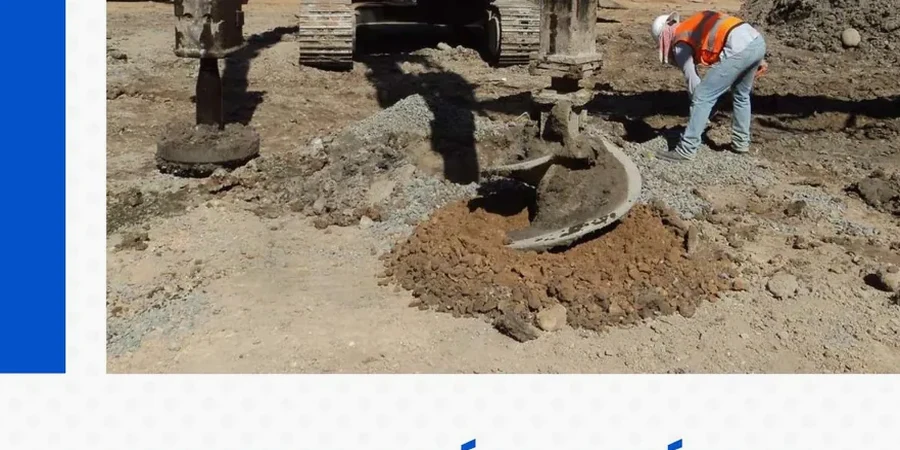
Practical geotechnics, field-tested.
LEARN MOREGround improvement in Brighton encompasses a range of geotechnical techniques designed to enhance the engineering properties of soil and rock beneath proposed structures. Given the city's coastal location and varied topography, from the chalk cliffs of the South Downs to the alluvial deposits in the city centre, the need for robust ground treatment is paramount. These methods increase bearing capacity, reduce settlement, mitigate liquefaction risk, and control groundwater, ensuring the long-term stability and safety of any construction project. Whether for a seafront regeneration scheme, a residential extension on a hillside, or a major infrastructure upgrade, understanding and applying the correct ground improvement strategy is the critical first step in foundation engineering.
Brighton's geology presents a complex and challenging picture for developers and engineers. The dominant feature is the Upper Chalk formation, which forms the iconic white cliffs and underlies much of the city. While strong in its natural state, the chalk can be highly variable, containing dissolution features, solution pipes, and infilled sinkholes that create significant collapse risks. Overlying the chalk on the coastal plain and in valley bottoms are superficial deposits of Coombe Deposits, a chalky, silty clay head material, and alluvium along the River Adur. These softer soils are prone to compression and settlement. Additionally, the raised beaches and storm gravels found at various elevations indicate historical sea-level changes and add another layer of geotechnical complexity, often requiring specialised approaches like stone column design to bypass weak layers.
All ground improvement works in Brighton must comply with the rigorous framework of UK and European standards. The primary design code is Eurocode 7 (BS EN 1997-1 and -2), which governs geotechnical design and ground investigation. This is supported by the UK National Annex, which provides country-specific parameters and safety factors. The execution of ground improvement is standardised by BS EN 14475, which covers the construction of reinforced fill. Crucially, the British Standard BS 8004 provides the code of practice for foundations, offering detailed guidance that is considered essential good practice. A thorough desk study and ground investigation compliant with BS 5930 (the code of practice for site investigations) is the non-negotiable starting point, often revealing the need for techniques like stone column design to densify loose granular soils or reinforce soft clays.
The types of projects in Brighton that frequently demand ground improvement are diverse. The city's ongoing urban densification sees numerous small-footprint residential projects on marginal land, where traditional pad or strip foundations are inadequate due to weak or variable ground. The regeneration of the Brighton Marina and seafront areas often involves construction on loose, saturated sands and made ground, where vibro-compaction or the installation of stone columns can prevent liquefaction and control settlement. Infrastructure projects, such as the improvement of the A27 or new sustainable drainage systems, require stabilisation of embankments and treatment of soft alluvial soils. Even the restoration and underpinning of historic Regency buildings on the steep slopes of the city requires delicate and highly engineered ground improvement to arrest movement without causing further damage.
Early indicators include a history of settlement or subsidence in the area, the presence of large trees, a high water table, or the site being located on mapped alluvium or Coombe Deposits. A Phase 1 desk study and walkover survey revealing soft ground, made ground, or proximity to chalk cliffs with known dissolution features are strong initial signals that a detailed ground investigation and likely ground improvement will be required.
Selection is driven by the ground investigation data interpreted against the project's specific loading and settlement requirements. For loose sands and gravels, vibro-compaction is common. For soft clays and silts, such as alluvium or Coombe Deposits, vibro-replacement with stone columns is often specified to deliver drainage and reinforcement. In chalk with solution features, compaction grouting or underpinning might be the chosen solution to fill voids and stabilise the rockhead.
The execution is governed by BS EN 14475 for reinforced fill construction, while the overarching design must conform to Eurocode 7 (BS EN 1997). The works fall under the Construction (Design and Management) Regulations 2015 (CDM) for health and safety. Compliance with the specification and method statements, which are based on these standards, is verified through rigorous field testing, such as plate load tests and integrity testing, as outlined in BS 8004.
Yes, it is frequently the enabling solution for extensions where traditional foundations are unsuitable due to poor ground or proximity to protected structures. Techniques are selected to minimise vibration and disturbance. For example, small-diameter stone columns can be installed with compact equipment in restricted access areas to reinforce weak soils without the deep excavation and risk associated with mass concrete underpinning, making it ideal for sensitive urban sites.