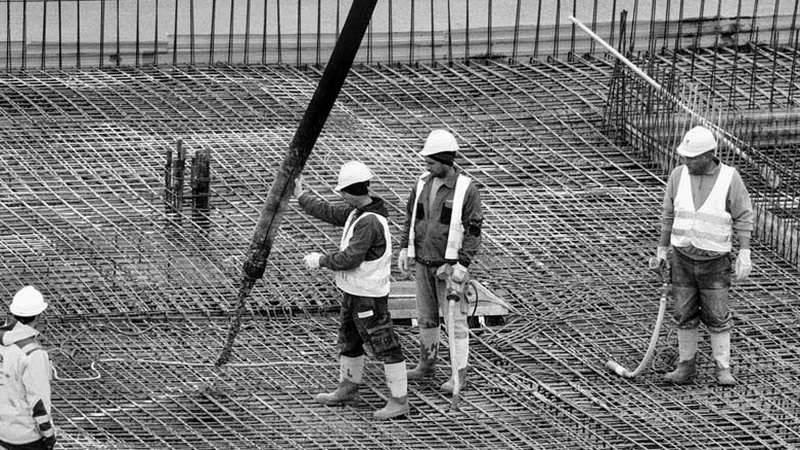
The ground beneath Kemp Town and the ground beneath Preston Park tell two completely different stories. Victorian terraces in the east sit on deeply weathered Upper Chalk with solution features — voids and softened putty zones that make settlement prediction a serious exercise. Head deposits over the chalk in the city centre add another layer of variability, with flint gravel lenses that drain freely but collapse under load. A raft foundation in Brighton has to span this heterogeneity, distributing column loads broadly enough to keep differential settlement within tolerable limits. BS EN 1997-1:2004 forces the designer to confront the difference between the intact chalk strength and the mass behaviour, and that distinction drives the entire bearing capacity assessment. When chalk dissolution features are suspected we often recommend pairing the raft design with a targeted CPT investigation to map the lateral extent of softened zones before finalising the raft geometry.
The difference between intact chalk strength and mass chalk behaviour drives the entire raft design — ignore that distinction and you are guessing.