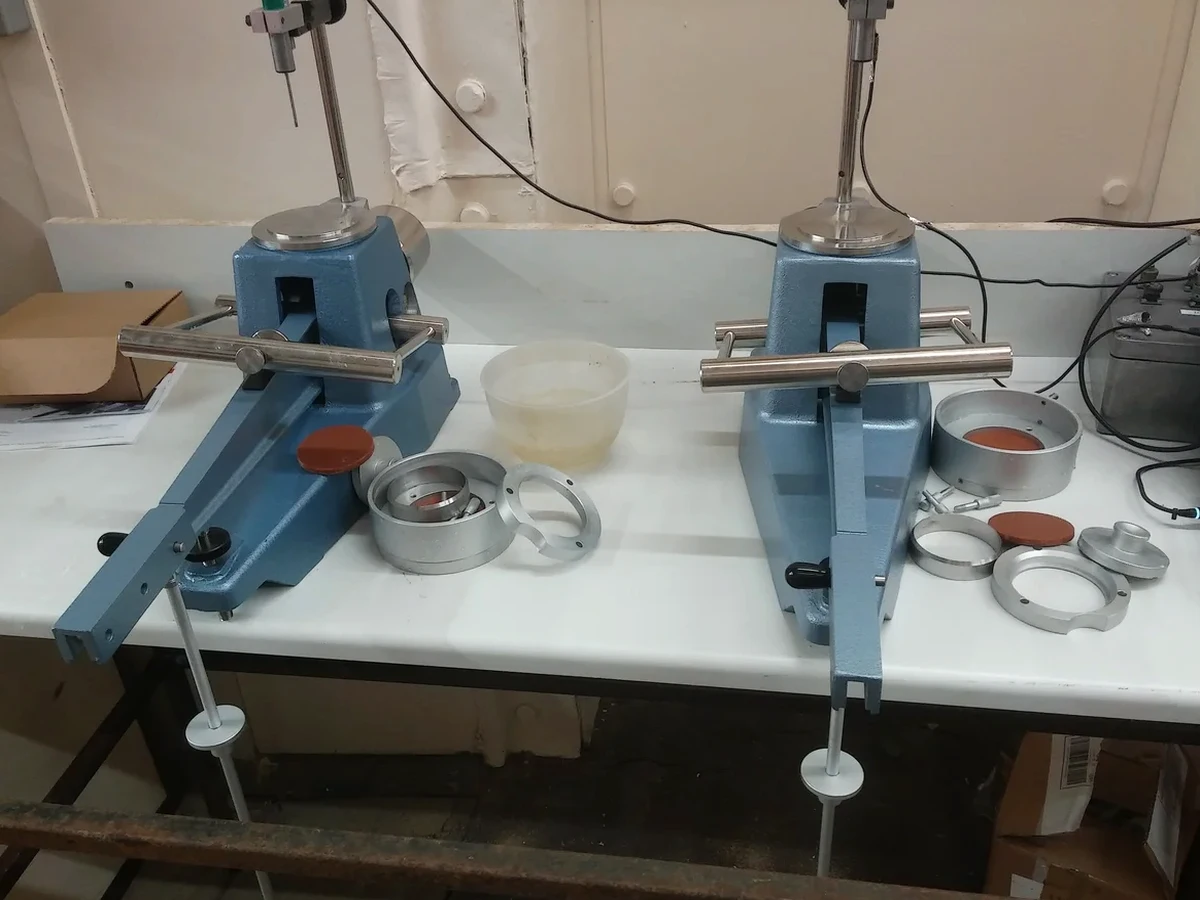
Brighton's transformation from a quiet fishing village into a dense Victorian seaside resort left behind a patchwork of made ground, buried chalk valleys and thick marine alluvium that geotechnical engineers still wrestle with today. The Royal Pavilion gardens sit on soft alluvium less than two kilometres from the dry chalk valleys of the South Downs, and that contrast makes plasticity testing indispensable before any foundation design. Our laboratory runs Atterberg limits on every fine-grained sample extracted from Brighton sites because the liquid limit and plasticity index directly control the swelling potential and volume change behaviour of the Gault Clay and Woolwich Beds that outcrop across the city. When borehole logs show grey silty clays below the shingle, we complement the classification with a grain-size analysis to separate the silt and clay fractions, since the combined hydrometer and sieve data is what BS 5930 requires for a full soil description.
A liquid limit above 50 % combined with a plasticity index over 25 % in Brighton's Gault Clay signals active mineralogy that will dominate the foundation design parameters.