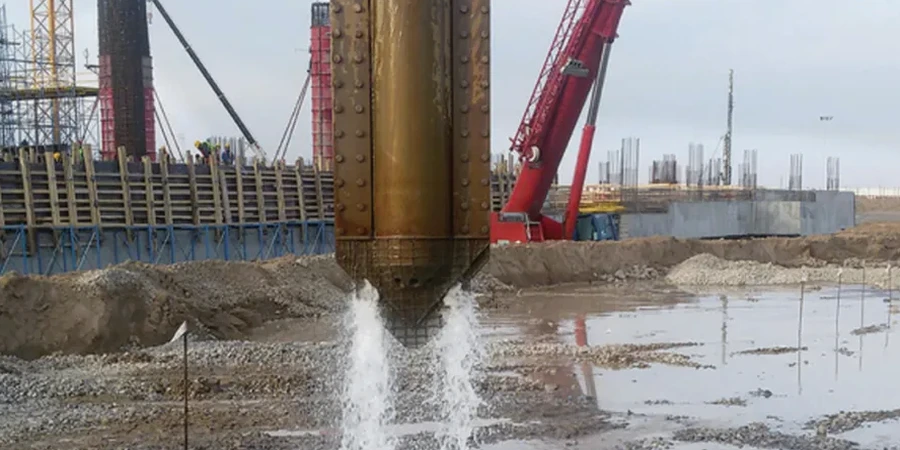
A common mistake we see on Brighton sites is assuming a dense chalk layer exists just below the surface. The reality is far more variable. Marine deposits, raised beach gravels, and weathered chalk can create a loose, compressible zone that standard strip footings simply cannot handle. Without a tailored ground improvement strategy, differential settlement appears within months. Condensation on bay windows. Cracks tracing mortar joints. In our track record, a properly designed vibrocompaction program eliminates these post-construction headaches at a fraction of the cost of deep piling. We combine decades of regional data with a CPT testing campaign to map the exact depth of competent chalk. This allows us to calibrate the vibrator frequency and probe spacing before mobilising any equipment to the site.
A vibrocompaction grid calibrated solely on desk study data fails more often than not in Brighton’s variable chalk. Real-time energy monitoring is the only reliable guide.