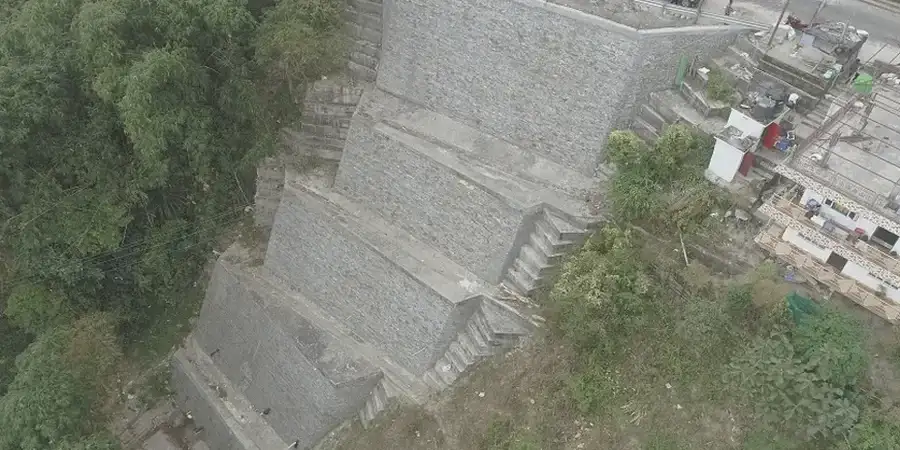
Brighton's dramatic topography, carved into the South Downs chalk and overlain by Coombe Deposits, demands rigorous slope stability analysis before any excavation or foundation work near the escarpment. Eurocode 7 (BS EN 1997-1:2004) and BS 5930:2015 are not just paperwork here; they are essential frameworks for managing the geotechnical uncertainty of a coastline that retreats at an average rate of 0.3 to 0.5 metres per year in some sections. Our team applies these standards daily, combining limit equilibrium methods with site-specific groundwater monitoring to deliver designs that account for Brighton's unique geology.
When a project sits near the degraded cliff line of Black Rock or the ancient landslide complexes at Roedean, a standard desk study is insufficient. We integrate data from cpt-test to profile the intact chalk strength at depth, and pair this with seismic-refraction surveys to identify the top of rock and hidden fracture zones that control failure mechanisms in the Brighton context.
A slope stability analysis in Brighton is only as good as its geological model: overlooking the Coombe Deposits' pre-existing shear surfaces can reduce the factor of safety from 1.4 to below unity.