GEOTECHNICAL ENGINEERING1
BRIGHTON
HomeSlopes & WallsRetaining wall design

Retaining Wall Design in Brighton – Coastal Ground Solutions That Last

Practical geotechnics, field-tested.

LEARN MORE

Brighton’s topography never lets you forget we’re perched on the South Downs. Run a project anywhere from the seafront to Patcham and the ground shifts dramatically within half a mile. We see developers caught out by perched groundwater in the chalk or by the soft Coombe deposits that sit over solid rock. A retaining wall here has to handle more than just earth pressure; it deals with salt-laden air, rapid runoff during winter storms, and a water table that rises faster than people expect. Getting the design wrong means cracking, leaning, or outright failure within a few seasons. That’s why we tie every retaining wall design to borehole data and local groundwater monitoring, not just textbook assumptions. When the geology varies as much as it does across the city, a generic solution simply won’t last.

A retaining wall in Brighton lives in a marine environment with an active water table; design it for drainage first, structural resistance second.
Our service areas

Methodology and scope

The contrast between a project in central Brighton and one up in Woodingdean is stark. Down near the station, you’re often in made ground over chalk, riddled with old basements and Victorian foundations, which demands careful back-analysis of existing loads. Up on the hill, the chalk is shallower but fractured, and the real challenge becomes managing surface water that funnels down the dip slope. We recently worked on a garden-level retaining wall in Rottingdean where the chalk was so blocky that a gravity wall would have been uneconomical; instead, we designed a reinforced concrete cantilever with a drainage blanket that tied into the natural fissure pattern. Across Brighton, we combine retaining wall design with slope stability analysis when there’s any inclination in the ground profile, and we frequently pair it with test pits to physically inspect the chalk structure before finalising reinforcement schedules. These aren’t optional extras; they’re what stop a wall from becoming a liability.
Retaining Wall Design in Brighton – Coastal Ground Solutions That Last
Technical reference — Brighton

Local considerations

Brighton sits at just a few metres above sea level along the front, rising to over 100 metres at the racecourse within two kilometres. That gradient, combined with the city’s average annual rainfall of around 800 mm concentrated in autumn and winter, creates a genuine risk of rapid pore pressure buildup behind retaining structures. We’ve inspected walls where the drainage had clogged after a single wet winter, and the resulting hydrostatic load had pushed the structure out of plumb by 40 mm. In the chalk, dissolution features can form small voids that suddenly collapse under load, especially in older parts of the city where historic wells and culverts were never properly recorded. A retaining wall design in Brighton that ignores these legacy features is gambling with public safety. We always specify a site-specific drainage strategy and, where the wall exceeds 2.5 metres in retained height, a monitoring plan for the first two seasonal cycles to catch any movement early.

Need a geotechnical assessment?

Reply within 24h.

Email: contact@geotechnical-engineering1.com

Applicable standards

BS EN 1997-1:2004 (Eurocode 7 – Geotechnical design), BS 8002:2015 (Code of practice for earth retaining structures), BS 5930:2015 (Site investigation), CIRIA C760 (Embedded retaining walls)

Technical parameters

ParameterTypical value
Design standardBS EN 1997-1:2004 (Eurocode 7)
Ground investigation referenceBS 5930:2015
Typical backfill friction angle (chalk)34° to 38° (depending on grade)
Minimum drainage provisionContinuous granular blanket + weep holes at 2 m c/c
Seismic coefficient (Brighton)0.015g to 0.025g (low seismicity zone)
Service life target60 years (aggressive marine exposure)
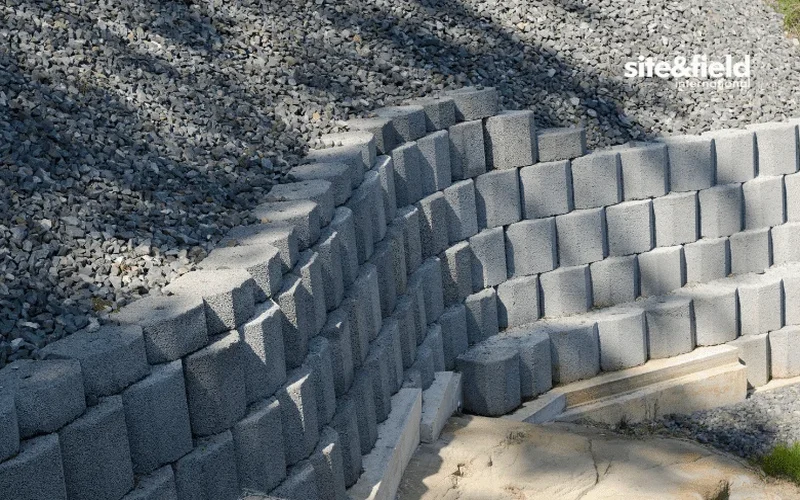
Common wall types in BrightonCantilever RC, embedded sheet pile, gabion (coastal slopes)

Frequently asked questions

What factors most influence retaining wall design in Brighton?

The main factors are the depth and quality of the chalk, the presence of made ground near the seafront, groundwater levels that fluctuate with the tide and seasonal rainfall, and the aggressive marine exposure that affects concrete durability. In our experience, the single biggest variable across Brighton is water: if the drainage isn't designed specifically for the local chalk fracture pattern, the wall will eventually move.

How long does it take to design a retaining wall in Brighton?

A straightforward residential retaining wall under 2 metres high can usually be designed within three to four weeks, including the site investigation and structural calculations. Larger commercial walls or those requiring embedded retaining solutions with temporary works take longer, typically six to eight weeks, because of the need for more extensive ground investigation and liaison with building control.

What is the typical cost range for retaining wall design in Brighton?

For a residential project, the design package including site investigation and structural drawings usually falls between £830 and £3,650, depending on the wall height, access constraints, and the complexity of the ground conditions. Commercial projects are quoted individually based on the scope of investigation required.

Location and service area

We serve projects across Brighton and surrounding areas. More info.

View larger map