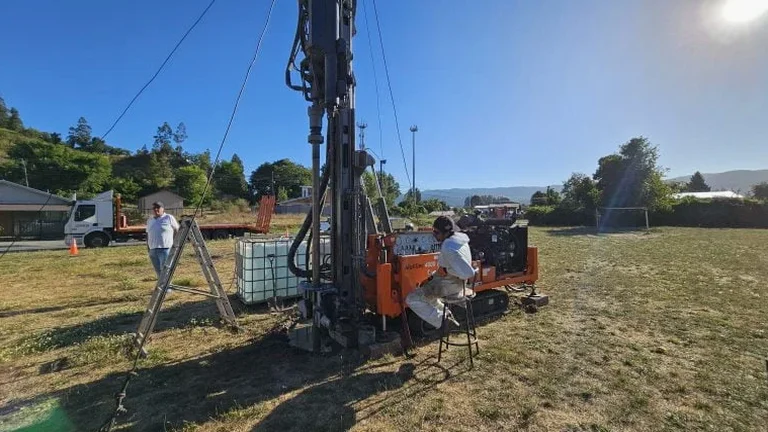
Quite often in Brighton, the first sign of trouble on a site isn't in the borehole log — it's when the excavator bucket hits something unexpected three metres down. The chalk around here doesn't always weather uniformly, and the dry valley fills can shift composition across a single building footprint. That's precisely where a well-placed exploratory test pit earns its keep. Rather than relying solely on point data from a borehole, opening a trench lets you walk the profile, photograph the contact between the Coombe deposits and the underlying White Chalk, and take block samples without the disturbance you'd get from a split spoon. We've found that combining a couple of test pits with targeted SPT drilling gives a much clearer picture of the ground than either method alone, particularly on the sloping sites that define so much of Brighton's residential development.
You cannot log chalk structure properly from a borehole core alone — the fissure spacing and infill material only become apparent once the trench face is cleaned and examined in daylight.