GEOTECHNICAL ENGINEERING1
BRIGHTON
HomeInvestigationSPT (Standard Penetration Test)

SPT Testing Brighton: BS 5930 & Eurocode 7 Standard Penetration Test

Practical geotechnics, field-tested.

LEARN MORE

BS 5930:2015+A1:2020 and Eurocode 7 (BS EN 1997-2:2007) set the framework for ground investigation in the UK, but applying them in Brighton means dealing with the White Chalk Subgroup and its variable weathering profile. N-values here swing from refusal on fresh chalk to single digits in Coombe deposits or solifluction head, sometimes within the same borehole. Our team runs the standard penetration test daily across Brighton—from the Marina to the South Downs fringe—and we know that correct SPT interpretation starts with understanding the local geology, not just the hammer blows. We often pair the SPT with CPT testing in the city centre where the raised beach deposits complicate the stratigraphy, or with test pits in residential plots where access for a drilling rig is tight.

In Brighton's chalk, an SPT N-value of 50+ may indicate either a solid chalk band or a flint nodule—knowing the difference comes from local experience, not just the test standard.
Our service areas

Our approach and scope

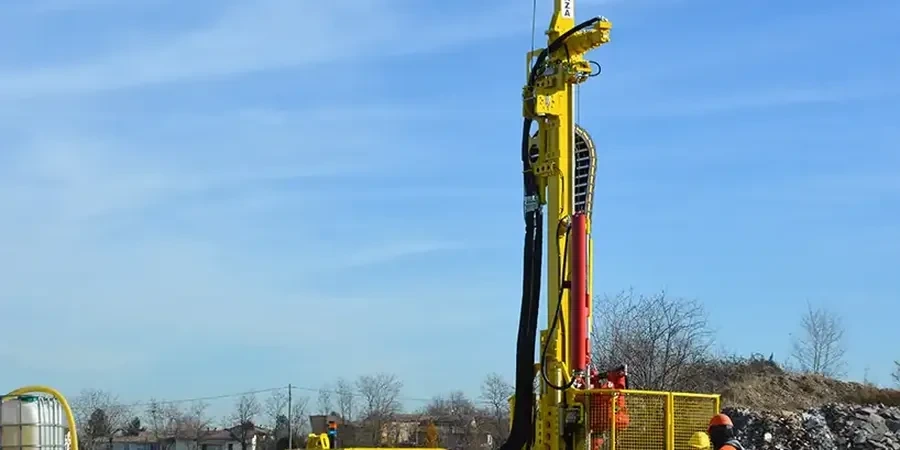
Brighton's coastal position means groundwater is rarely far from the surface, especially in the valley gravels of the Wellesbourne and the alluvium near the seafront. A dry borehole at 2 metres can become a wet one at 4 metres after a spring tide—this affects SPT blow count correction for overburden and energy ratio. Our rigs are calibrated to BS EN ISO 22476-3 and we log every run with the split-spoon sampler, noting recovery, chiselling intervals, and any loss of circulation. In chalk we apply the SPT cautiously; the test is informative but we always combine it with rotary coring to confirm fracture spacing and infill. For sites on the Palaeogene Lambeth Group clays, the N-value profile helps define the swelling potential, which matters for footing design and basement waterproofing. We deliver field logs within 24 hours and final reports with corrected N60 values, soil descriptions to BS 5930, and derived parameters for bearing capacity and settlement.
SPT Testing Brighton: BS 5930 & Eurocode 7 Standard Penetration Test
Technical reference — Brighton

Site-specific factors

The Brighton Chalk is a dual-porosity aquifer: water moves through fractures, not the matrix. An SPT that misses a flint band or a solution pipe can give a false sense of uniformity. We have seen sites where N-values above 50 alternate with zones of soft putty chalk at N=8—these are dissolution features filled with clay, common on the dip slope north of the A27. In the Kemptown area, the Lambeth Group clays can contain sand lenses under artesian pressure; a sudden inflow during SPT sampling is a real hazard. Overlooking these details leads to pile refusal at unexpected depths or excessive settlement under load. The liquefaction assessment is less critical in Brighton than in sandy estuaries, but the loose silty sands in the buried channel of the River Adur tributaries require checking if the design includes deep basements.

Need a geotechnical assessment?

Reply within 24h.

Email: contact@geotechnical-engineering1.com

Watch the video

Reference standards

BS 5930:2015+A1:2020 Code of practice for ground investigations, BS EN ISO 22476-3:2005+A1:2011 Geotechnical investigation and testing — Field testing — Part 3: Standard penetration test, Eurocode 7: BS EN 1997-2:2007 Geotechnical design — Part 2: Ground investigation and testing

Technical parameters

ParameterTypical value
Test StandardBS EN ISO 22476-3:2005+A1:2011
SamplerStandard split-spoon (BS 5930)
Hammer typeAutomatic trip hammer, energy calibrated
Test intervalEvery 1.0 m or at stratum change
N-value correctionN60 per EN 1997-2 Annex D
ReportingField logs + corrected N60 + derived parameters
Typical depth rangeUp to 30 m bgl in chalk, deeper in superficial deposits

Quick answers

How much does an SPT in Brighton typically cost?

For a single borehole with SPT at standard 1.0 m intervals to 10-15 m depth, budget between £400 and £590 plus VAT. Mobilisation cost depends on access: a track-mounted rig on open ground is straightforward; a narrow-access rig for a mews property in North Laine will add to the day rate. We deliver fixed-price quotes after reviewing the site location and proposed depth.

How do you handle SPT in Brighton's chalk when N-values are above 50?

We log the blow count for the full 300 mm penetration even beyond 50 blows, and note any chiselling or rod bounce. The test is then terminated and we switch to rotary coring to recover the chalk intact. The refusal depth and the fracture state of the core are used together to define the rockhead and any weathered zones for foundation design.

Is SPT enough for a basement design in Brighton's clay areas?

SPT provides a useful index of consistency for the Lambeth Group and London Clay Formation clays, but for basement design we supplement it with laboratory triaxial tests on undisturbed samples to measure effective shear strength and stiffness. The SPT profile also guides the depth of the retaining wall toe and helps assess temporary excavation stability.

Location and service area

We serve projects across Brighton and surrounding areas.

View larger map